
Where you look, you go – what is Target Fixation when riding a motorcycle?

gs 1300 taget fixation gdzie patrzysz tam jedziesz motorland wypozyczalania motocykli w maladze

Does a motorcycle really go where you look?

Every motorcyclist has heard the phrase at least once: “Look where you want to go.” It is one of the most important principles of safe riding and, at the same time, the foundation for understanding the phenomenon known as Target Fixation.

Target Fixation, or “fixation on a target”, is a situation in which a motorcyclist focuses their vision on an obstacle instead of the safe path around it. The result? The motorcycle often begins to travel directly toward the object the rider was trying to avoid.

This phenomenon affects both beginner and highly experienced riders. It most often occurs in stressful situations – when taking corners at higher speeds, when an unexpected obstacle appears, or in moments of panic.

What is Target Fixation?

Target Fixation (visual fixation) is a natural reaction of our brain.

When we notice a danger, our attention automatically focuses on it. The problem is that while riding a motorcycle, vision, head movement, balance, and steering are strongly connected.

If you keep looking at:

  • a safety barrier,
  • a car,
  • a tree,
  • a pothole in the road,
  • a curb,
  • a pole,

it becomes very easy to unconsciously steer the motorcycle in that direction. That is why riding instructors teach riders to look at the corner exit or open space, not at the obstacle.


Why does this happen?

It is not any kind of “motorcycle magic”.

While riding, the body automatically synchronizes:

  • the direction of your vision,
  • head movement,
  • shoulder position,
  • hand control on the handlebars,
  • body balance.

Under stress, these reactions become even stronger. Instead of consciously controlling the motorcycle, we start reacting instinctively. As a result, it becomes difficult to turn where we are not looking.


The most common situations where Target Fixation occurs

A corner taken too fast

This is a classic example.

The rider realizes they entered a corner at excessive speed. Instead of looking toward the corner exit, they start staring at the barrier or the roadside.

The result?

The motorcycle straightens its line and travels exactly where the rider’s eyes are directed.


A pothole in the road

Everyone knows this situation.

You notice a large pothole.

You look at it.

You want to avoid it.

…and you ride straight through the middle of it.


A car pulling out from a side road

When seeing a vehicle approaching an intersection, many motorcyclists focus only on it.

Meanwhile, it is much better to observe the entire situation and at the same time plan a safe escape route.


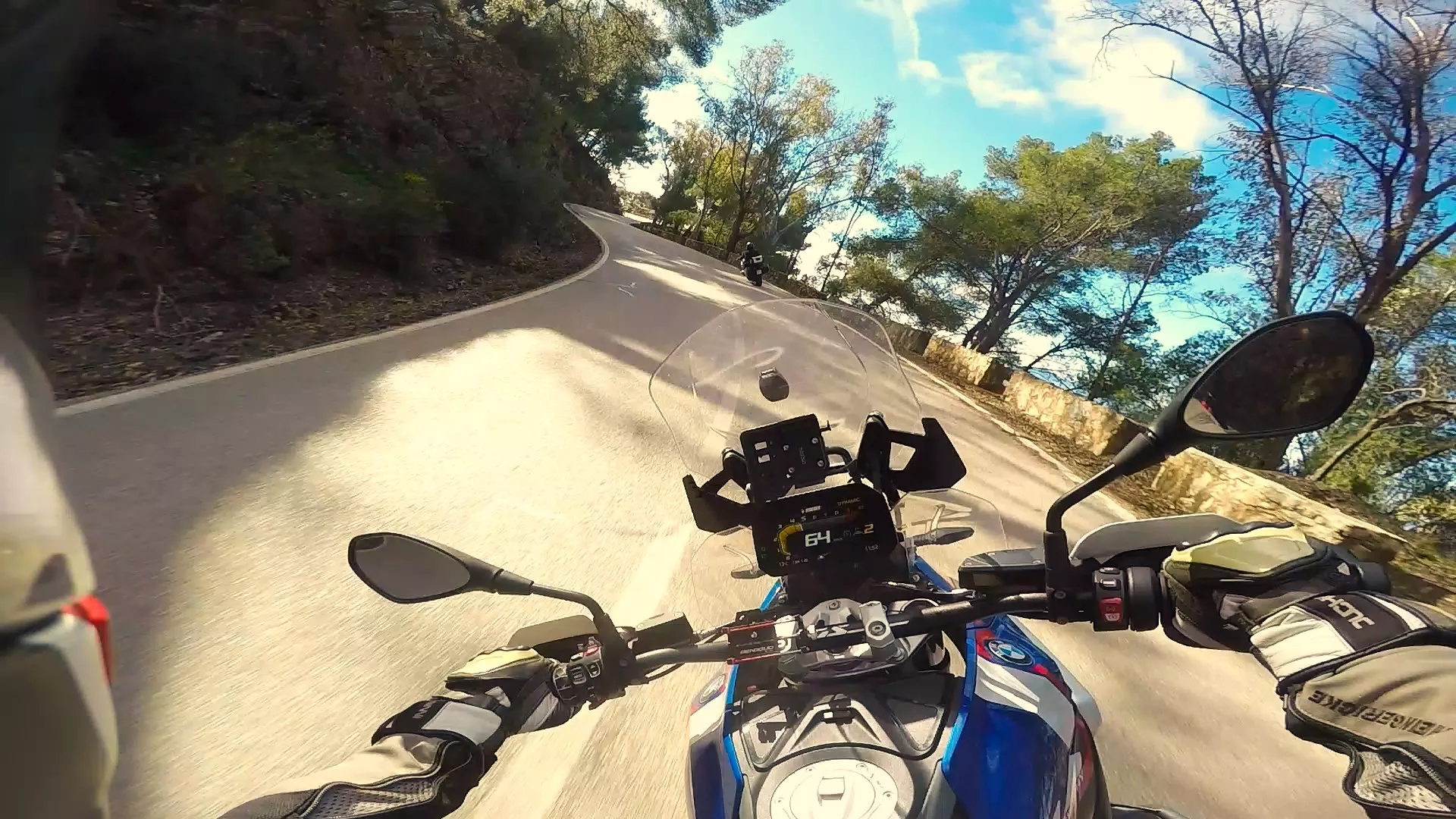
Mountain riding

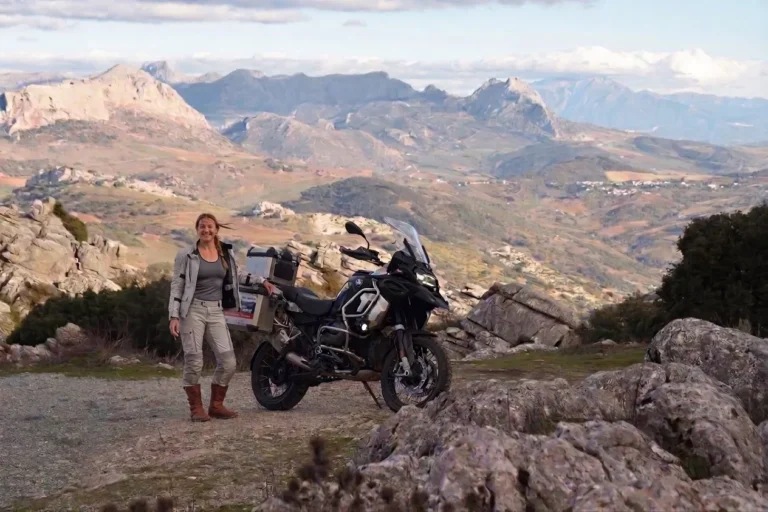
The winding roads of Andalusia, the Alps, or the Pyrenees are beautiful, but they require proper observation technique.

Looking only a few meters ahead of the front wheel makes smooth riding much more difficult.

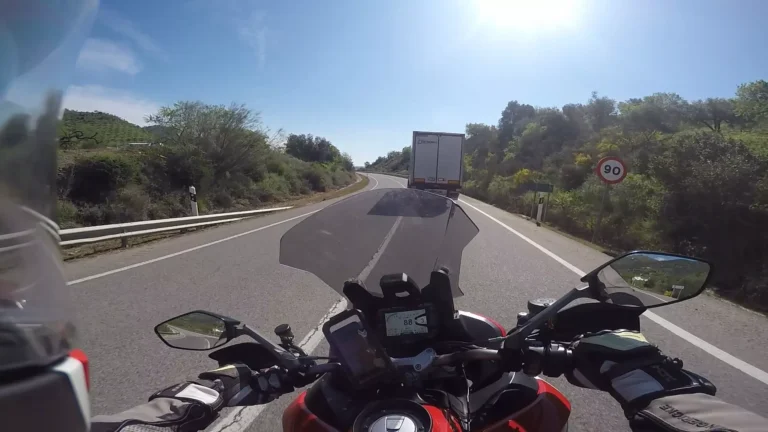
Experienced motorcyclists look far ahead and search for the exit of every corner.

How to avoid Target Fixation?

Look where you want to go

This is the most important rule.

Do not look at the obstacle.

Look at the open space next to it.

Your brain will guide the motorcycle along the correct path much more easily.


Turn your head

Simply moving your eyes is often not enough.

When taking corners, turn your head toward the corner exit.

This naturally helps you maintain the correct riding line.


Look far ahead

Do not focus your vision directly in front of the motorcycle.

Observe the road several dozen meters ahead.

This gives you more time to react and reduces the chance of panic.


Stay calm

Panic braking and stiff arms often make the problem worse.

A motorcycle is usually more capable of taking a corner than it seems at first.

Smooth movements and a calm focus help you use its full potential.


Practice your vision technique

The best time to do this is during relaxed rides.

Practice:

  • looking through the corner,
  • watching the exit of the bend,
  • scanning the road,
  • consciously moving your focus.

Over time, it will become a natural reflex.


Does Target Fixation only affect beginners?

No.

Experienced motorcyclists can also be affected by this phenomenon.

It most often happens when:

  • they are tired,
  • they ride faster than usual,
  • a sudden danger appears,
  • they are surprised by an unfamiliar road.

That is why the correct vision technique should be practiced regularly, regardless of riding experience.


Frequently Asked Questions About Target Fixation

Does Target Fixation really exist?

Yes. It is a well-documented phenomenon related to the way your direction of vision influences motorcycle control, especially under stress.

Yes. Regularly practicing road observation techniques and consciously looking where you want to go significantly reduces the risk.

Because corners require you to simultaneously judge speed, riding line, and direction. When stress appears, your vision can easily become “locked” onto the obstacle.

Yes, but on a motorcycle the effects are usually more noticeable because balance and steering are more strongly connected to the direction of your gaze.

Target Fixation is one of the most common mistakes made by motorcyclists. Although it may seem easy to avoid, in stressful situations it can lead to losing control of the motorcycle and colliding with an obstacle.

That is why, during every ride, remember one simple rule:

Do not look at what you want to avoid. Look where you truly want to go.

It is a simple habit that can significantly improve safety during both everyday rides and motorcycle trips through Andalusia, Europe, or other parts of the world.

Leave a Comment

Your email address will not be published. Required fields are marked *