Motorcycle Trip to Romania – Rules, Preparation, Currency, Fines and the Best Routes

motocyklem do rumunii wynajem motocykli turystycznych podroze motocyklowe wypozyczalnia motocyklowa

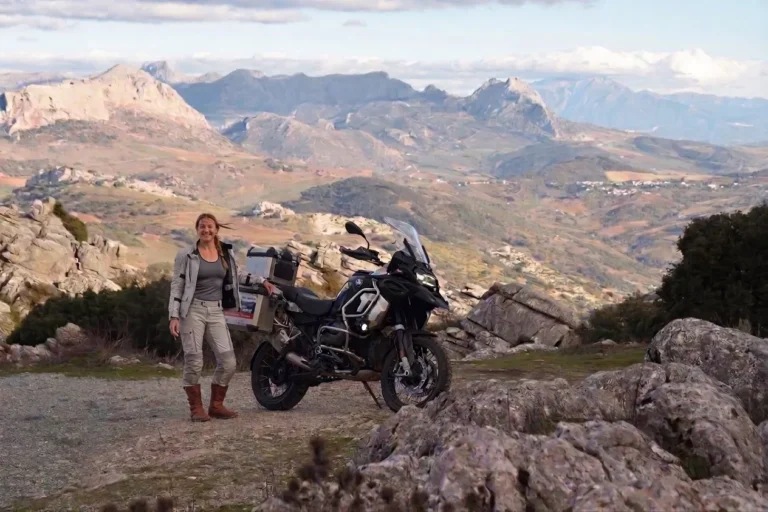
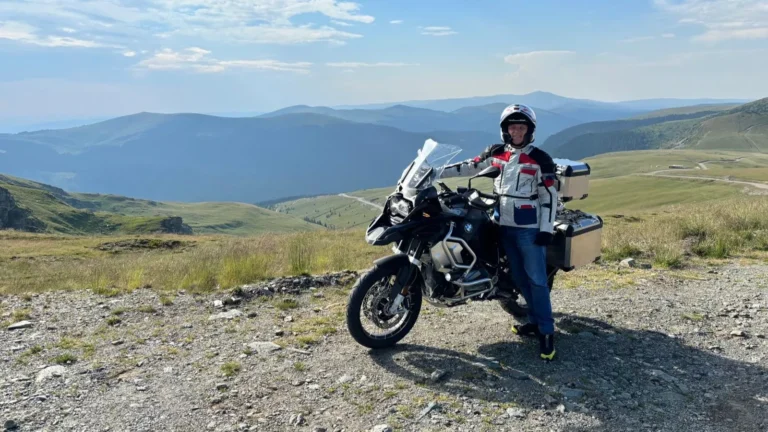
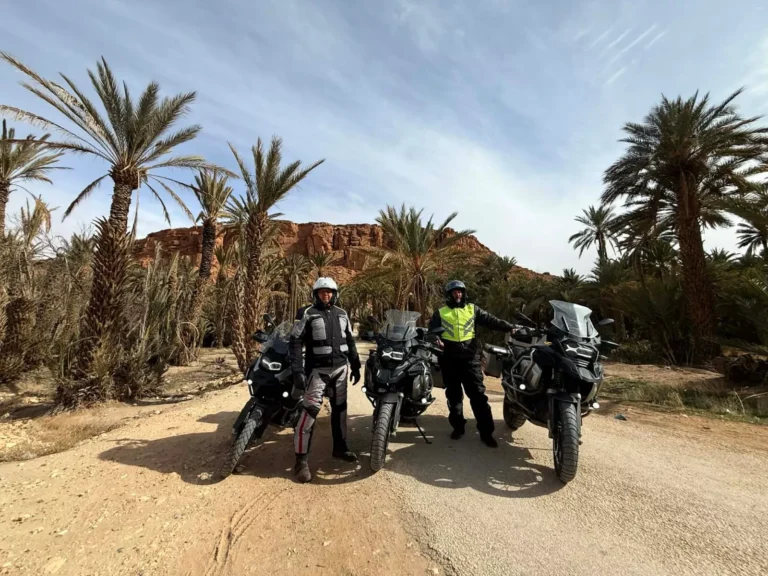
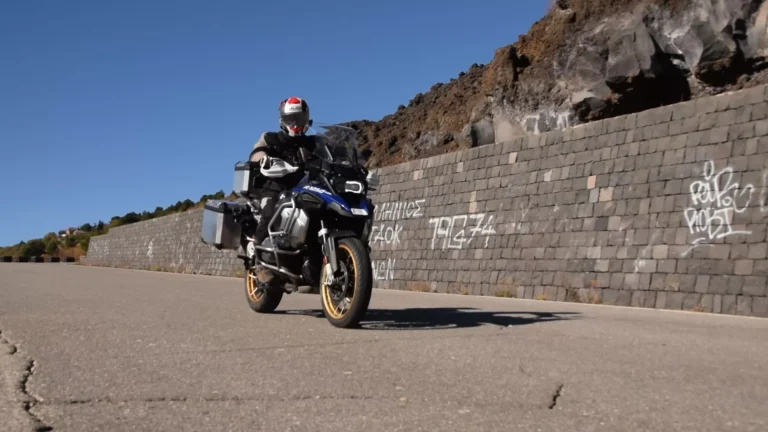
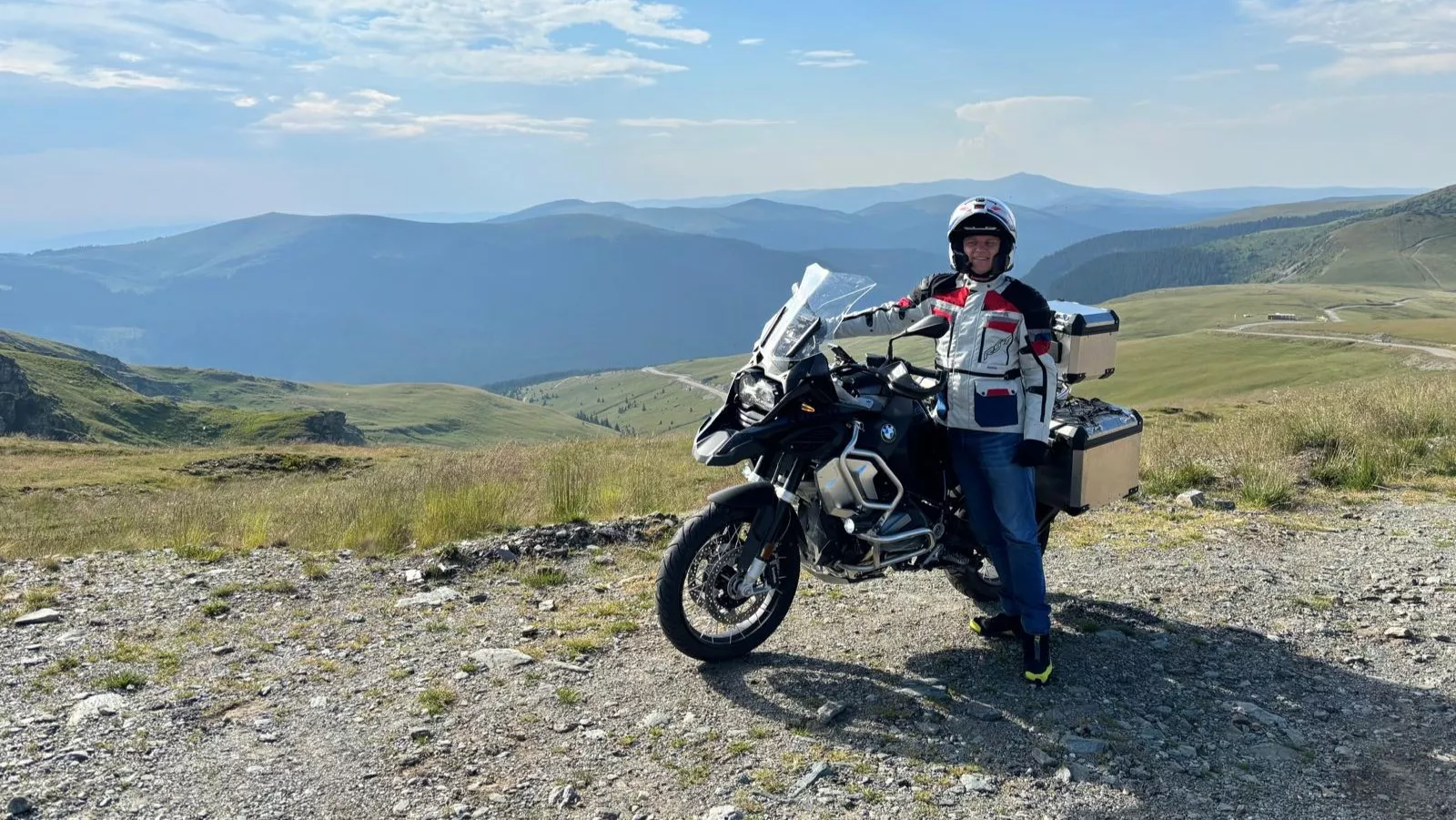
Romania by motorcycle is one of the best ideas for a motorcycle trip through Europe. The Carpathians, hundreds of kilometres of winding roads, high mountain passes, the Transfăgărășan, the Transalpina, medieval towns of Transylvania and an incredible variety of landscapes have been attracting motorcyclists from all over the world to Romania for years.

At the same time, a motorcycle trip to Romania is worth preparing for carefully. Local road regulations are relatively straightforward, but they differ in several important respects from the rules in other European countries. Particular attention should be paid to speed limits, the requirement to ride with lights on, helmet requirements, documents, alcohol limits, roadside checks and seasonal restrictions on mountain roads.

In this guide, you will find everything worth knowing before your trip: what to take on a motorcycle trip to Romania, which documents are required, what speed limits apply, whether motorcycles need a vignette, how high fines are in Romania, what a roadside check looks like, and how to safely plan a ride on the Transfăgărășan and Transalpina.

In short: Romania is a very motorcycle-friendly country, but its roads should not be treated like a racetrack. The greatest pleasure comes from riding smoothly, predictably and with a good safety margin.

Why Is Romania Worth Visiting by Motorcycle?

If you are looking for a destination for a several-day or even several-week motorcycle trip through Europe, Romania should be high on your list.

The biggest attraction is, of course, the Carpathians. This is where some of Europe’s most famous motorcycle roads can be found:

  • Transfăgărășan (DN7C),
  • Transalpina (DN67C),
  • the mountain passes of the Southern Carpathians,
  • roads in the Brașov and Sibiu regions,
  • routes around Bran, Râșnov and Sighișoara,
  • roads in northern Romania and Maramureș.

Another major advantage of Romania for motorcyclists is its diversity. In a single day, you can ride through a busy city, peaceful villages, fast national roads, forested switchbacks and high mountain passes.

However, this does not mean that every Romanian road is perfect. Road conditions can change suddenly, and on local roads you should be prepared for potholes, patched asphalt, animals, agricultural vehicles and unpredictable behaviour from other drivers.

That is why riding a motorcycle in Romania requires a slightly different riding style than, for example, travelling on a German motorway.


Motorcycle Trip to Romania – What to Prepare?

Before setting off, it is worth preparing a separate checklist covering the motorcycle, documents, equipment and the rider themselves.

Motorcycle Documents

For a motorcycle trip to Romania, take:

  • the motorcycle registration certificate,
  • a valid driving licence for the appropriate category,
  • an identity document,
  • proof of third-party liability insurance,
  • documents confirming your right to use the motorcycle if you are not its owner,
  • an assistance insurance policy, if you have one.

If you are travelling on a motorcycle owned by a company, rental company or another person, it is worth carrying a document confirming that you are authorised to use the vehicle.

If you choose to rent a motorcycle in Romania, carefully check before setting off which documents and insurance coverage are provided by the rental company.

For drivers from outside the European Union, specific requirements regarding travel documents and driving licences may depend on the country where the document was issued. It is worth checking these requirements before travelling using official Romanian sources.


Motorcycle Driving Licence in Romania

To ride a motorcycle, you need a driving licence for the appropriate category.

In practice, a motorcyclist with a valid driving licence issued by an EU country can use it in Romania under the rules applicable within the European Union.

Drivers from outside the EU should check before travelling whether their national driving licence is recognised in Romania and whether they need an International Driving Permit (IDP).

This is particularly important for people flying to Romania and renting a motorcycle locally.


Does a Motorcycle Need a Vignette in Romania?

This is one of the most frequently asked questions by motorcyclists planning a motorcycle trip to Romania.

Motorcycles are not subject to the standard Romanian rovinieta.

The Romanian rovinieta system applies to specific categories of vehicles, while motorcycles are not included in the categories subject to this fee. This also follows from the definition of vehicles covered by the system, which applies to vehicles with at least two axles.

This means that when riding a typical touring, sport or adventure motorcycle, you do not need to purchase a Romanian vignette simply because you are travelling on national roads or motorways.

This is a significant advantage compared with travelling by car.

It is worth remembering one important point: the fact that motorcycles are exempt from the rovinieta does not mean that no possible road charges apply to motorcycles in Romania. Specific rules may apply to particular crossings, bridges or other infrastructure charges, so before setting off it is worth checking the latest information for your planned route.

Can you ride a motorcycle on Romanian motorways?

Yes.

Motorcycles can use Romanian motorways, provided that the motorcycle meets the technical requirements and there is no local restriction in force.

For a touring motorcyclist, a motorway is primarily a way to cover long distances quickly. If the main goal is the enjoyment of riding, national and mountain roads are definitely more interesting.

A good solution is therefore to divide the route:

motorway → fast transfer between regions → national road → hairpin bends → local mountain roads.

This way, you do not lose an entire day crossing the country, while still leaving yourself enough time to enjoy the best sections.


Speed limits in Romania – for motorcycles

One of the most important things to know before starting your motorcycle journey in Romania is the speed limits.

The basic maximum speed limit in built-up areas is:

50 km/h.

On certain sections in built-up areas, a higher speed limit may be set for vehicles in categories A and B, up to a maximum of 80 km/h, but only where properly indicated by road signs.

Outside built-up areas, motorcycles in category A are generally subject to the following limits:

Type of road Maximum speed
Motorway 130 km/h
Expressway 120 km/h
European E-road 100 km/h
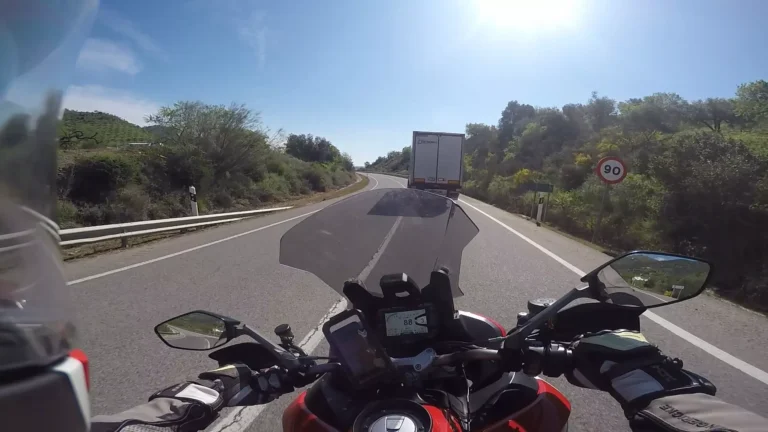
Other roads 90 km/h

These are maximum limits, however. The current road signs on the specific section always take precedence.

For example, a mountain road may have a significantly lower speed limit, and on a section of the Transalpina, a 30 km/h limit applies in 2026.


Important for beginner motorcyclists

Romania has an additional rule worth remembering.

A driver who has held a driving licence for less than one year is subject to a maximum speed limit outside built-up areas that is 20 km/h lower than the limit applicable to the relevant vehicle category.

So, if you are a beginner motorcyclist, do not automatically assume that you can ride at 130 km/h simply because this is the motorway limit for motorcycles.


Fines in Romania – how much does speeding cost?

As of 1 July 2026, the value of one fine point in Romania is 216.25 lei. This represents 5% of the Romanian gross minimum wage, which has been set at 4,325 lei since July 2026.

The current basic fine classes are:

  • Class I: 2–3 points = 432.50–648.75 lei,
  • Class II: 4–5 points = 865–1,081.25 lei,
  • Class III: 6–8 points = 1,297.50–1,730 lei,
  • Class IV: 9–20 points = 1,946.25–4,325 lei.

This means that even a relatively minor speeding offence can have a noticeable impact on your wallet.


Speeding – the most important thresholds

For motorcyclists, the following ranges are particularly important:

Amount over the speed limit Penalty points Sanction
10–20 km/h 2 fine, Class I
21–30 km/h 3 fine, Class II
31–40 km/h 4 fine, Class III
41–50 km/h 6 fine, Class IV
More than 50 km/h 6 fine + driving licence suspension
More than 70 km/h 6 fine + 120-day suspension

Exceeding the speed limit by more than 50 km/h results in a 90-day suspension of the right to drive, while exceeding it by more than 70 km/h results in a 120-day suspension.

For foreign motorcyclists, it is particularly important to note that these sanctions may also affect the ability to ride a vehicle within Romanian territory, even if the driving licence was issued by another country. Romanian regulations allow a driving ban within Romanian territory to be imposed on holders of foreign driving licences in certain circumstances.

Practical advice

It is very easy to exceed the speed limit on Romania’s best roads.

A long straight, good asphalt, an empty landscape and a powerful motorcycle can make the speedometer jump from 90 to 130 km/h in an instant.

That is why on the Transfăgărășan, Transalpina and other mountain roads in Romania, it is better to treat the speed limit as a real boundary rather than a suggestion.

Does the Romanian police actually check motorcyclists?

Yes.

This is one of the myths that is best left at home.

Romania is not a country where motorcyclists can assume that the rules are merely “suggestions.” The police conduct roadside checks and use speed-measuring devices, and speeding offences can result in fines and penalty points.

The regulations also specify that speed measurements used for imposing penalties must be carried out using an appropriate, approved, and metrologically verified device.

The best strategy?

Don’t look for ways to avoid a traffic check; instead, ride in a way that gives the police no reason to stop you.


Motorcycle helmet in Romania – mandatory

There are no exceptions for tourists here.

Both the motorcycle rider and passenger are required to wear an approved protective helmet.

In practice, it is best to use a helmet that meets the current homologation requirements and carries the appropriate certification marking.

Don’t treat the helmet merely as a legal requirement. In the mountains, temperatures, wind, insects, stones thrown up by other vehicles, and sudden changes in weather make proper head protection absolutely essential.


Do you have to ride with your lights on in Romania?

Yes.

Motorcycles and mopeds are required to use dipped-beam headlights during the day.

If your motorcycle switches the lights on automatically, there is nothing to worry about.

If it doesn’t, make it a simple habit:

engine → lights → go.

This is particularly important after refuelling, stopping at a viewpoint, or setting off in the morning.


Do you need to carry a reflective vest?

For an ordinary touring motorcyclist, a reflective vest is not a general mandatory item of equipment comparable to a helmet.

Nevertheless, it is definitely worth carrying one.

Romanian mountain roads can involve:

  • fog,
  • heavy rain,
  • thunderstorms,
  • sudden drops in temperature,
  • limited visibility,
  • a motorcycle breakdown far from built-up areas.

A lightweight vest or jacket with reflective elements takes up very little space and can significantly improve a motorcyclist’s visibility in the event of a breakdown.


Warning triangle, fire extinguisher and first-aid kit – does a motorcyclist need them?

This is an interesting difference.

Since 2024, Article 8 of Romanian law explicitly exempts vehicles in categories AM, A1, A2 and A from the requirement to carry warning triangles, a first-aid kit and a fire extinguisher, which applies to other vehicle categories.

In practice, this means that a typical category A motorcyclist does not have to carry the standard car emergency kit: a first-aid kit + two warning triangles + a fire extinguisher.

However, this does not mean that carrying a basic emergency kit is not worthwhile.

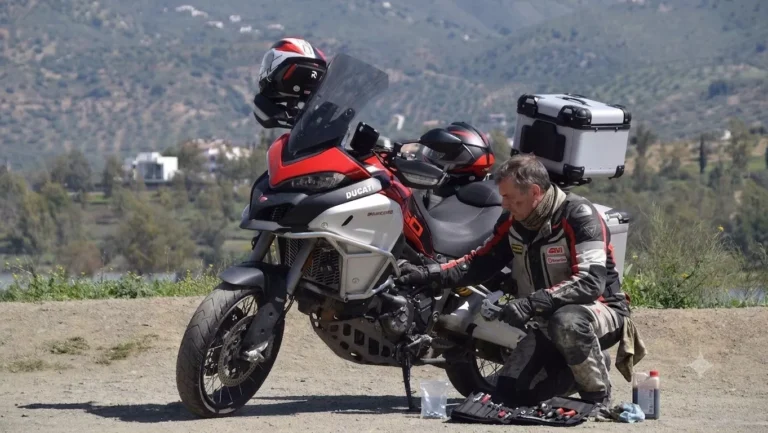
For a longer motorcycle trip, it is worth taking:

  • a tyre repair kit,
  • a compressor or small pump,
  • basic tools,
  • spare fuses,
  • cable ties,
  • repair tape,
  • work gloves,
  • a small first-aid kit,
  • a power bank,
  • a flashlight.

These are not items required by Romanian law for motorcycles. They are things that can save the day if you break down 100 km from the nearest major city.

Alcohol and Riding a Motorcycle in Romania

The rule here is simple:

Do not ride after drinking alcohol.

Romanian regulations provide for liability for driving under the influence of alcohol, and when the blood alcohol concentration exceeds 0.80 g/l of pure alcohol in the blood, criminal liability may apply.

The police may conduct a breath alcohol test using certified equipment, and in certain circumstances biological tests may also be carried out.

For a motorcyclist, the safest rule is:

zero alcohol before riding.

It is not worth calculating whether one beer is “still within the limit.”


Using a Phone While Riding a Motorcycle

Using a phone while driving a vehicle is prohibited, except in situations permitted by law, such as using a hands-free system.

Therefore, if you use navigation:

  • set your route before setting off,
  • use a motorcycle phone mount,
  • use voice navigation instructions,
  • do not operate the screen while riding.

In the mountains, one moment of inattention can be far more dangerous than spending a few minutes pulling over.


How to Ride a Motorcycle in Romania

The biggest difference between riding in Romania and, for example, Germany or Austria is not limited to the regulations.

It is about your riding style.

On many roads, you need to anticipate the behavior of other road users.

Pay particular attention to:

  • cars entering the road from side roads,
  • tractors and agricultural machinery,
  • horses and horse-drawn carts,
  • pedestrians,
  • cyclists,
  • dogs,
  • livestock,
  • sudden changes in road surface,
  • vehicles stopping without an obvious reason,
  • overtaking on national roads.

Be especially cautious in rural areas.

Psy i inne zwierzęta – problem, którego nie widać na mapie

Motocyklista planujący zwiedzać Rumunię motocyklem powinien mieć na uwadze obecność zwierząt.

Na mniej uczęszczanych drogach możesz spotkać:

  • psy,
  • owce,
  • konie,
  • krowy,
  • dzikie zwierzęta.

Nie próbuj przewidywać zachowania psa, który biegnie wzdłuż drogi.

Jeżeli zwierzę znajduje się blisko jezdni:

zwolnij wcześniej i zostaw sobie dużo miejsca.

To jedna z najważniejszych zasad bezpiecznej jazdy po rumuńskich drogach lokalnych.


Drogi górskie – tutaj zaczyna się prawdziwa przygoda

Dla większości motocyklistów głównym celem podróży będzie jedna z dwóch tras:

Transfăgărășan

Transfăgărășan, czyli droga DN7C, przecina Karpaty i jest jednym z najbardziej rozpoznawalnych motocyklowych miejsc w Europie.

Czekają tutaj:

  • serpentyny,
  • ostre nawroty,
  • duże różnice wysokości,
  • jezioro Bâlea,
  • tunele,
  • wysokogórskie krajobrazy,
  • liczne punkty widokowe.

Ale popularność trasy ma również drugą stronę.

W sezonie letnim może być bardzo tłoczno. Na drodze spotkasz samochody, motocykle, kampery, rowerzystów i pieszych.

Dlatego najlepszym rozwiązaniem jest przejazd wcześnie rano.

Nie traktuj Transfăgărășan jak toru wyścigowego

To jedna z najważniejszych zasad.

Niektóre zakręty wyglądają niewinnie, ale za kolejnym łukiem może znajdować się:

  • samochód stojący na środku drogi,
  • pieszy,
  • rowerzysta,
  • mokra nawierzchnia,
  • zwierzę,
  • kamień na jezdni.

Na tej trasie płynna jazda daje więcej frajdy niż maksymalna prędkość.


Transalpina motocyklem

Drugą legendarną trasą jest Transalpina, czyli DN67C.

To jedna z najwyżej położonych dróg w Rumunii i jeden z najlepszych wyborów na motocyklową trasę przez Karpaty.

W 2026 r. odcinek Rânca–Curpăț został otwarty 29 maja. Wprowadzono jednak ograniczenia czasowe: od 1 lipca ruch na tym odcinku jest zamykany w godzinach 21:00–07:00, a obowiązujący limit prędkości wynosi 30 km/h.

To doskonały przykład tego, dlaczego przed wyjazdem warto sprawdzić aktualny stan dróg, a nie polegać wyłącznie na informacjach znalezionych kilka lat wcześniej.

Warunki na drogach wysokogórskich mogą się zmienić bardzo szybko. Mgła, intensywny deszcz, burza, osuwiska, kamienie czy inne zagrożenia mogą doprowadzić do czasowego ograniczenia lub zamknięcia ruchu.


Transfăgărășan i Transalpina – kiedy jechać?

Najlepszy sezon na wysokogórską wyprawę motocyklem po Rumunii przypada zasadniczo na miesiące letnie.

Ale nie zakładaj, że:

„jest czerwiec, więc wszystkie drogi są otwarte”.

Drogi górskie są uzależnione od:

  • śniegu,
  • temperatury,
  • stanu nawierzchni,
  • prac drogowych,
  • osuwisk,
  • pogody,
  • decyzji zarządcy drogi.

Rumunia posiada również specjalne regulacje dotyczące organizacji ruchu na drogach górskich, w tym na Transfăgărășan i Transalpinie.

Przed wyjazdem zawsze sprawdź aktualne komunikaty zarządcy drogi.


Pogoda w Rumunii – motocyklista musi być przygotowany

Rumunia jest duża, a różnice wysokości są ogromne.

Możesz rano wyjechać z miasta przy temperaturze 25–30°C, a kilka godzin później znaleźć się wysoko w górach przy temperaturze kilkunastu stopni, silnym wietrze i deszczu.

Dlatego nawet podczas letniej wyprawy warto mieć:

  • membranę przeciwdeszczową,
  • dodatkową warstwę termiczną,
  • rękawice na chłodniejsze warunki,
  • komin lub buff,
  • wodoodporne zabezpieczenie bagażu.

Najgorszy błąd to zaplanowanie całego dnia wyłącznie na podstawie temperatury w miejscu startu.

How to Plan a Motorcycle Route Through Romania

If you have 3–4 days, it is worth focusing on a single region.

If you have a week, you can create a much more interesting loop.

Example 7-Day Motorcycle Route

Day 1: enter Romania → Timișoara / surrounding area

Day 2: ride towards Transylvania → Sibiu

Day 3: Transfăgărășan → Curtea de Argeș area

Day 4: cross the Carpathians → Râmnicu Vâlcea / Horezu

Day 5: Transalpina → Rânca / Sebeș

Day 6: Transylvania → Sighișoara / Brașov

Day 7: return towards the border

Of course, the route can be extended to include:

  • Brașov,
  • Bran,
  • Peleș Castle,
  • Sighișoara,
  • Sibiu,
  • Maramureș,
  • Bukovina,
  • the Danube Delta.

The most important tip?

Don’t plan to ride 500–600 km a day just because Google Maps shows a short travel time.

On mountain motorcycle roads, your average speed will be much lower.


How Many Kilometers Should You Plan to Ride Per Day?

For an experienced motorcyclist:

  • 200–300 km – a relaxed day with plenty of time for photos,
  • 300–400 km – a good touring day,
  • 400–500 km – a long day,
  • 500+ km – more suitable as a transit day than a sightseeing day.

If your route includes Transfăgărășan or Transalpina, 250 km can easily be a full day of riding.

That is precisely why a motorcycle trip through Romania should be planned according to riding time and the character of the road, rather than kilometers alone.


What to Take on a Motorcycle Trip to Romania?

Documents

  • ID card or passport,
  • driving licence,
  • vehicle registration certificate,
  • insurance documents,
  • rental documents – if the motorcycle is rented,
  • assistance service details.

Motorcycle

Before setting off, check:

  • tyres,
  • tyre pressure,
  • brakes,
  • drive chain and drivetrain,
  • engine oil,
  • coolant,
  • lights,
  • turn signals,
  • battery,
  • suspension condition.

Equipment

It is worth taking:

  • a tyre repair kit,
  • a compressor,
  • basic tools,
  • a USB charger,
  • a power bank,
  • a phone mount,
  • navigation device,
  • waterproof bags,
  • a high-visibility vest,
  • a first-aid kit,
  • a flashlight.

Clothing

For the Romanian mountains:

  • helmet,
  • motorcycle jacket,
  • motorcycle trousers,
  • gloves,
  • motorcycle boots,
  • thermal layer,
  • rain gear.

Remember that safety goes beyond what is required by law.


Motorcycle Rental and Motorcycle Transport to Romania for Groups

Planning a motorcycle trip to Romania but don’t want to cover a long transit route? For groups of 5 or more motorcyclists, Motorland.rent offers the option of arranging motorcycle transport to Romania combined with motorcycle rental.

This is a convenient solution for groups of friends, motorcycle clubs and teams planning a shared adventure. The motorcycles are delivered to your destination, allowing you to start riding directly on Romanian roads and spend more time exploring Transfăgărășan, Transalpina and the Carpathians.

When planning your trip, it is worth confirming the availability of motorcycles, dates, number of participants and transport details with Motorland.rent in advance.


Roadside Checks in Romania – How Should You Behave?

If the police stop you for a roadside check:

  • slow down,
  • pull over in a safe place,
  • switch off the engine if requested by the officer,
  • have your documents ready,
  • remain calm,
  • don’t try to argue about every individual regulation,
  • if you receive a fine, read the document before signing it.

The best way to handle a roadside check is simply to remain calm and polite.

Don’t assume that being a tourist automatically means you will receive more lenient treatment.


How Strictly Are Traffic Regulations Enforced in Romania?

This question comes up very often before a first trip.

The answer is simple: traffic regulations should be taken seriously.

Some drivers’ behavior may appear more dynamic than in Western Europe, but this should not lead a motorcyclist to assume that speed limits are optional.

Be particularly careful with:

  • speed,
  • overtaking,
  • solid lines,
  • pedestrian crossings,
  • intersections,
  • built-up areas,
  • restrictions on mountain roads.

The best approach is to follow this rule:

“I ride according to the signs, not according to how other people ride.”


Romania by Motorcycle – the Most Common Mistakes Tourists Make

1. Riding Too Fast

The biggest temptation.

A wide road and a powerful motorcycle can quickly lead to exceeding the speed limit.

2. Not Wearing Appropriate Clothing

It can be hot in the valleys and cold high in the mountains.

3. Planning Distances That Are Too Long

300 km on winding mountain roads is completely different from 300 km on a motorway.

4. Ignoring the Weather

Mountain weather can change very quickly.

5. Riding Unfamiliar Local Roads After Dark

If you don’t have to, plan to arrive before dark.

6. Not Keeping Enough Fuel in Reserve

Fuel stations are available on the main routes, but on more remote roads, it is better not to ride with the tank almost empty.

7. Treating the Transfăgărășan Like a Race Track

It is a public road, not a closed racing circuit.


Is It Worth Riding a Motorcycle to Romania?

Definitely.

If you’re looking for a destination where, within just a few days, you can combine:

motorcycle twisties + mountains + culture + history + great food + reasonable travel costs, Romania is one of the best destinations in Europe.

The greatest attraction isn’t even the Transfăgărășan itself.

It’s the entire journey.

Roads winding through the Carpathians, small towns, local restaurants, medieval cities, mountain passes and constantly changing landscapes make a motorcycle trip to Romania easy to plan for almost any number of days.

And most importantly:

Romania is a country best discovered from the seat of a motorcycle. Leave yourself time for stops, photos, local food and spontaneous detours from the main route. The best motorcycle trip isn’t the one where you cover the most kilometres, but the one you return from already looking forward to the next one.

Information for Readers

Traffic regulations, fine amounts, seasonal restrictions and rules concerning mountain roads may change. This guide was prepared based on regulations and information available in August 2026. Before starting your journey, it is worth checking the latest updates from the Romanian authorities, road authorities, as well as current document and insurance requirements.

Official Sources

  • Romanian Road Traffic Code – OUG 195/2002.
  • Romanian Legislative Portal – current legislation.
  • Romanian Ministry of Foreign Affairs – visa and travel document information.
  • CNAIR – information on roads and road tolls.

Leave a Comment

Your email address will not be published. Required fields are marked *