Group Motorcycle Riding – How to Organize a Safe and Enjoyable Trip?

motocyklowe wyjazdy grupowe podroze motocyklem wypozyczalnia motocykli

Why Is Group Motorcycle Riding So Popular?

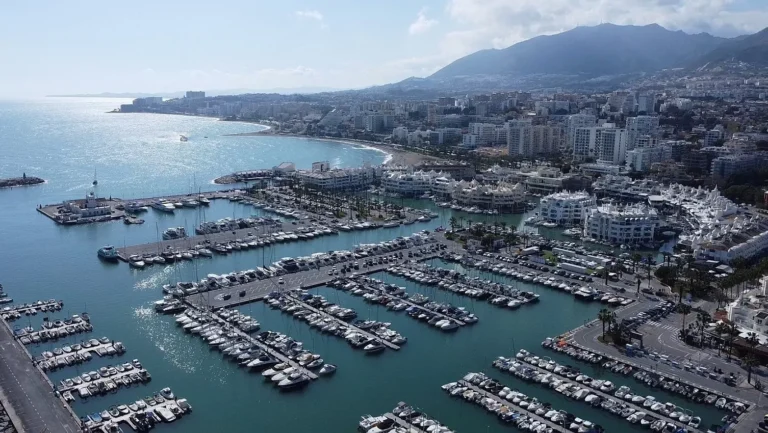
Traveling together by motorcycle is one of the best ways to discover new places, share a passion for riding, and create unforgettable memories. Whether you’re planning a weekend trip through Spain, a motorcycle tour across Europe, a journey along scenic roads in the United States, or an adventure in Australia, a well-organized group ride can be an incredibly rewarding experience.

At the same time, group riding requires more discipline and organization than solo travel. The more motorcyclists take part in the trip, the more important communication, planning, and adherence to safety rules become.

In this guide, we explain how to organize a safe and comfortable motorcycle trip for both small and large groups.

Advantages of Group Motorcycle Riding

A well-organized group ride offers many benefits:

  • greater safety during the journey,
  • mutual assistance in case of breakdowns,
  • easier handling of long-distance routes,
  • the possibility of sharing accommodation and travel costs,
  • shared discovery of new places,
  • higher motivation during multi-day trips.

For many motorcyclists, group travel is the best way to explore new regions and build relationships with people who share the same passion.


How to Choose Ride Participants

One of the most common mistakes is forming groups made up of riders with very different levels of experience and riding styles.

Before the trip, it is worth agreeing on:

  • participants’ experience level,
  • preferred riding pace,
  • daily distance,
  • type of route,
  • planned stops,
  • expectations regarding accommodation and budget.

If some members prefer relaxed touring while others prefer sporty riding, conflicts can arise very quickly.


Assign a Group Leader

Every group should have one person responsible for leading the ride.

The leader is responsible for:

  • choosing the route,
  • maintaining the pace,
  • making decisions during the trip,
  • planning stops,
  • communicating with participants.

Ideally, this should be the most experienced rider, who knows the route or has prepared a detailed travel plan in advance.

The Role of the Sweep Rider

In addition to the leader, it is also worth assigning a so-called “sweep rider”, a person who rides at the back of the group.

Their responsibilities include:

  • monitoring the group’s situation,
  • assisting riders in case of problems,
  • informing the leader about stops or delays,
  • securing the group during breakdowns.

In larger groups, this role significantly improves ride organization.


The Safest Group Riding Formation

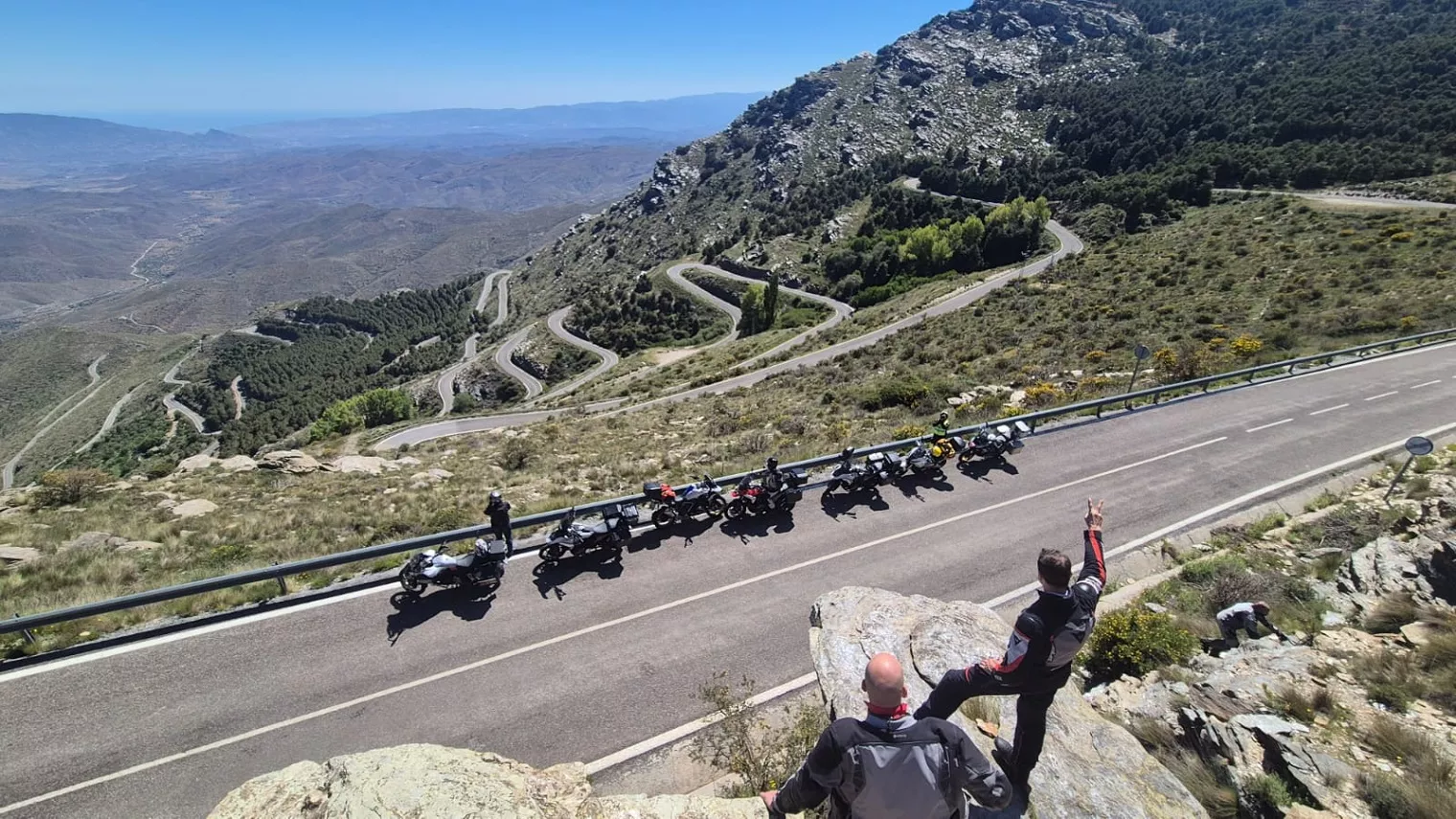
The most commonly used formation is the staggered formation.

It looks like this:

  • the leader rides on the left side of the lane,
  • the second rider on the right side,
  • the third again on the left,
  • and the rest alternating.

This formation:

  • improves visibility,
  • increases safety distances,
  • allows quicker reaction to hazards.

On winding mountain roads or in poor weather conditions, the group should switch to a single-file formation.


Maintain Proper Distance

One of the biggest risks in group riding is riding too close to other motorcycles.

Minimum distances should allow for:

  • emergency braking,
  • avoiding obstacles,
  • a safe reaction to mistakes made by others.
Do not try to maintain visual contact at all costs. Safety should always take priority over group tightness.

Establish Communication Rules

Before setting off, it is worth discussing the basic signals used while riding.

The most commonly used signals include:

Indicating an obstacle

The rider points with their hand to the hazard on the road.

Need to stop

Raised hand or intercom signal.

Slowing down

A downward hand motion.

Refueling

A gesture pointing to the fuel tank.

Clear communication helps avoid misunderstandings and increases the safety of the entire group.


Are Intercoms Worth Using?

Modern motorcycle intercoms significantly simplify the organization of group rides.

Benefits:

  • fast communication,
  • warning about hazards,
  • coordination of stops,
  • easier navigation.

For groups of several riders, intercoms can greatly improve travel comfort.


How to Plan Stops?

Fatigue is one of the most common causes of mistakes while riding a motorcycle.

A good practice is to stop every:

  • 90–120 minutes,
  • 100–150 kilometers,
  • more often in high temperatures.

During stops it is worth:

  • hydrating the body,
  • checking the condition of the motorcycle,
  • discussing the next part of the route.

What to Do if Someone Gets Separated from the Group?

This is a situation that can happen even to experienced motorcyclists.

That is why before the ride you should:

  • share the GPS route with everyone,
  • define meeting points,
  • exchange phone numbers,
  • use location-sharing apps.

Never turn around abruptly on a busy road in an attempt to find the group.


Organizing International Motorcycle Tours

More and more motorcyclists are choosing group motorcycle trips across Europe.

The most popular destinations include:

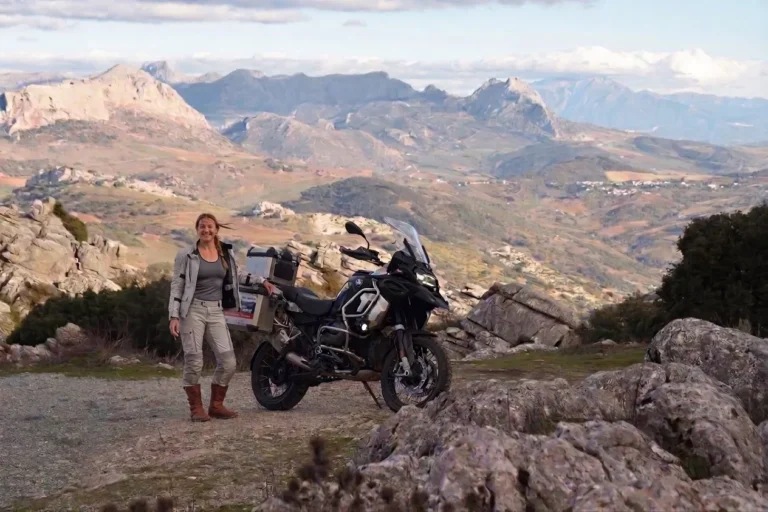
Andalusia – Spain

The region offers:

  • spectacular mountain roads,
  • sunny weather for most of the year,
  • light traffic outside the tourist season,
  • excellent tourist infrastructure.

The Alps

Ideal for lovers of mountain switchbacks and high-altitude passes.

Portugal

A combination of Atlantic coastline and scenic inland roads.


Most Common Mistakes in Group Riding

Avoid the following issues:

  • riding beyond your own skill level,
  • competition between participants,
  • groups that are too large,
  • lack of agreed communication,
  • no emergency plan,
  • ignoring fatigue.

The safest groups are those that prioritize smooth and predictable riding.

FAQ – Group Motorcycle Riding

How many motorcycles should ride in one group?

The most comfortable groups consist of 4 to 8 motorcycles. Larger groups should be split into smaller sections.

On straight roads, the staggered formation works best. On winding sections, riders should switch to riding in a single file.

Yes, provided that the group adjusts its pace to the least experienced participants.

Most commonly every 90–120 minutes, or more often in hot weather.

The most experienced motorcyclist, who knows the route and can maintain a safe pace.

Group motorcycle riding can be one of the most rewarding experiences for any rider. However, success depends on proper organization, clear communication, and adherence to safety rules. A well-prepared group allows you to enjoy the route, discover new places, and create memories that last for years.

Whether you’re planning a weekend trip along the Costa del Sol, a motorcycle road trip across Europe, or a multi-day adventure with friends, safety should always remain the most important aspect of any journey.

Leave a Comment

Your email address will not be published. Required fields are marked *