
Safety, Technique, Comfort, and Frequently Asked Questions
Riding a motorcycle with a passenger is a completely different experience compared to riding solo. The bike behaves differently—its dynamics change, braking distance increases, acceleration is reduced, and the way it handles corners is noticeably affected. For many people, it’s also the first step toward sharing a passion for motorcycling with someone else, whether it’s a partner, a child, or a friend.
In this article prepared by Motorland, you’ll find a comprehensive guide that answers the most frequently asked questions on Google about riding a motorcycle with a passenger. You’ll learn how to prepare your bike, how to carry a passenger safely, and what mistakes to avoid.
Is Riding a Motorcycle with a Passenger Safe?
Yes – riding with a passenger can be safe, provided that both the rider and the passenger follow proper safety rules and the motorcycle is designed and prepared for carrying two people.
Safety depends on three key factors:
- the rider’s experience and skill level,
- the passenger’s behavior and awareness,
- the technical condition of the motorcycle.
A motorcycle with a passenger behaves differently than when riding solo—it becomes heavier, accelerates more slowly, requires a longer braking distance, and demands greater caution when cornering and braking.
How to Prepare a Motorcycle for Riding with a Passenger?
Not every motorcycle is immediately ready to carry a passenger, so proper preparation is essential before setting off. Here’s what you should check:
1. Motorcycle Homologation and Design
The motorcycle must be properly equipped and approved for carrying a passenger, which means it should have:
- a dedicated passenger seat,
- passenger footpegs,
- an appropriate maximum load capacity (GVW).
2. Tire Pressure
When riding with a passenger, tire pressure should always be increased according to the manufacturer’s recommendations, as the additional weight significantly affects handling and safety.
3. Suspension
On many motorcycles, it is necessary to adjust the suspension to handle the extra load, which may include:
- increasing the rear shock preload,
- adjusting damping settings to maintain stability and comfort.
4. Luggage
If you are traveling with luggage in addition to a passenger:
- avoid overloading the motorcycle beyond its limits,
- distribute the weight evenly to maintain balance and proper handling.
How Should a Passenger Behave on a Motorcycle?
A passenger has a significant impact on overall riding safety, and their behavior can either support the rider or make controlling the motorcycle much more difficult. Even small, unintentional movements can affect balance, especially at lower speeds or during cornering.
Rules for the Passenger:
- The passenger should avoid making sudden or independent movements that could destabilize the motorcycle.
- They should follow the rider’s body position and naturally align with the direction of travel.
- The passenger should hold onto designated grab handles or, if agreed with the rider, gently hold the rider’s waist or hips for added stability.
- They should not lean outward in corners or try to counterbalance the motorcycle on their own.
- Changing position, standing up, or shifting weight during the ride should be avoided unless absolutely necessary and communicated in advance.
Communication
Before setting off, it is essential to establish clear and simple communication signals that both the rider and passenger understand, such as:
- a signal to stop the motorcycle,
- a warning signal in case something feels wrong or uncomfortable,
- basic behavior rules for cornering and braking situations.
Good communication builds trust and ensures that both rider and passenger feel confident and in control throughout the journey.
How Does Riding with a Passenger Change the Motorcycle’s Behavior?
This is a crucial topic that is often underestimated, especially by less experienced riders who may not anticipate how significantly a passenger affects the motorcycle’s dynamics.
1. Longer Braking Distance
The increased weight of the motorcycle and passenger results in greater inertia, meaning it takes more time and distance to slow down or come to a complete stop.
2. Slower Acceleration
Additional weight works against acceleration, so the motorcycle requires more time and throttle input to reach the same speeds as it would when riding solo.
3. Different Handling in Corners
With a passenger on board:
- the motorcycle becomes less agile and responsive,
- it requires smoother, more deliberate steering inputs,
- sudden or aggressive maneuvers should be strictly avoided to maintain stability.
4. Stability at Higher Speeds
The added mass can improve straight-line stability at higher speeds, making the motorcycle feel more planted on the road, but at the same time it reduces responsiveness and makes quick reactions more challenging, requiring the rider to anticipate situations earlier.
How to Start and Brake with a Passenger?
Starting:
When setting off with a passenger, it is crucial to operate the throttle smoothly and progressively, avoiding any sudden bursts of acceleration that could surprise the passenger or disrupt the balance of the motorcycle. A gentle and controlled start allows the passenger a moment to naturally “sync” with the movement of the bike, adjust their body position, and feel stable before the ride continues.
Braking:
Braking with a passenger requires more anticipation and finesse than riding solo, as the increased weight significantly affects stopping distance and overall stability. You should begin braking earlier than usual, apply both front and rear brakes in a balanced way, and focus on smooth, progressive pressure on the levers to avoid abrupt weight shifts that could make the passenger feel unstable or unsafe.
How to Take Corners with a Passenger?
Cornering with a passenger is one of the most critical aspects of riding safely, as it requires precision, smoothness, and a clear understanding of how the additional weight affects the motorcycle.
Key Principles:
- Avoid sudden or aggressive leaning of the motorcycle, as it can unsettle both the bike and the passenger.
- Make all movements gradual and fluid, especially when entering and exiting corners.
- Maintain a consistent line through the corner and avoid changing your trajectory mid-turn, which could destabilize the motorcycle.
- Allow the passenger to naturally follow your body position rather than forcing or guiding their movement.
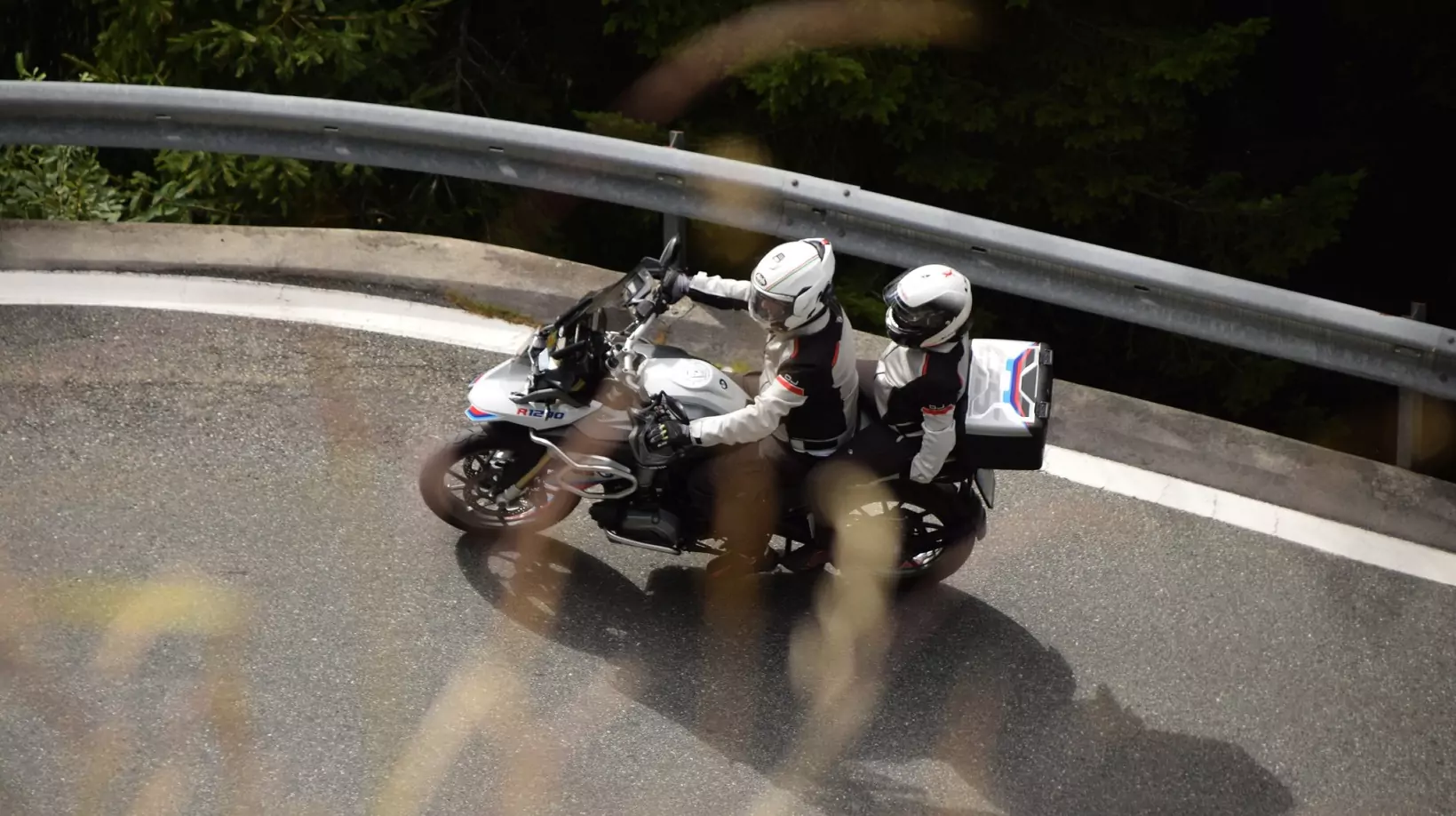
The passenger should gently lean together with the motorcycle, staying relaxed and aligned with the rider, but should never attempt to initiate or exaggerate the movement independently.
What Should a Passenger Wear on a Motorcycle?
The passenger’s safety is just as important as the rider’s, and proper protective gear is essential regardless of the distance or type of ride.
Essential Gear:
- A certified, properly fitted helmet that meets safety standards.
- A motorcycle jacket equipped with protective armor to safeguard key impact areas.
- Motorcycle pants or reinforced jeans with protective inserts to reduce injury risk.
- Gloves to protect the hands and improve grip and comfort during the ride.
- Sturdy, full footwear that covers the ankles, providing both protection and stability.
Wearing appropriate gear not only increases safety but also enhances overall comfort, allowing the passenger to feel more secure and relaxed throughout the journey.
The Most Common Mistakes When Riding with a Passenger
1. Riding Too Aggressively
Sudden acceleration and harsh braking are among the most common mistakes riders make when carrying a passenger, often leading to discomfort, fear, and a lack of trust from the person sitting behind you. Riding in an overly dynamic or unpredictable way can quickly turn what should be an enjoyable experience into a stressful one.
A piece of “big brother” advice:
As the rider, you have a real influence over whether someone’s first motorcycle experience becomes the beginning of a lifelong passion or an unpleasant memory they never want to repeat. Women—and in fact any passenger—truly appreciate responsible riders who prioritize safety, smoothness, and comfort, so if you want the ride to end with a smile rather than hesitation or fear, focus on being calm, predictable, and fluid in every movement, making sure your passenger feels safe and confident from start to finish.
2. Lack of Communication with the Passenger
A passenger who doesn’t know what to expect may feel anxious or react unpredictably, which can affect the stability of the motorcycle. Clear communication before and during the ride is essential to build trust and ensure both parties feel comfortable.
3. Improper Motorcycle Setup
Incorrect tire pressure, poorly adjusted suspension, or ignoring the additional load can significantly impact how the motorcycle handles, reducing both safety and comfort. Proper setup is a fundamental step that should never be overlooked before riding with a passenger.
4. An Unprepared Passenger
A person riding for the first time may feel nervous, tense, or even panic in certain situations, which can lead to sudden movements that destabilize the motorcycle. Taking a moment to explain basic rules and expectations before the ride can make a huge difference in overall safety and comfort.
Can Anyone Ride as a Motorcycle Passenger?
In theory, almost anyone can be a passenger on a motorcycle, but in practice, certain conditions should be met to ensure safety and a positive experience:
- the passenger should be calm and able to stay relaxed during the ride,
- it is beneficial if they have at least some prior experience or understanding of motorcycle behavior,
- children can only be carried on suitable motorcycles and must wear properly fitted helmets and protective gear appropriate for their size.
Does Riding with a Passenger Require More Experience?
Absolutely—riding with a passenger demands a higher level of skill, awareness, and responsibility compared to riding solo.
It is strongly recommended that the rider:
- has fully mastered solo riding,
- understands how their motorcycle reacts in different situations,
- is capable of performing controlled emergency braking,
- has solid experience handling corners smoothly and confidently.
Motorcycle Rental at Motorland.rent
Riding a motorcycle with a passenger is a unique and rewarding experience that combines excitement with shared moments, but it requires proper preparation, the right technique, and mutual trust between rider and passenger. The key to a successful ride lies in smooth control, clear communication, and a full understanding of how the motorcycle behaves under additional load.
If you’d like to experience riding with a passenger without investing in your own motorcycle, take advantage of the Motorland.rent offer and choose a bike perfectly suited for shared journeys.
In the fleet, you’ll find touring motorcycles that are ideal for carrying a passenger, offering comfort, stability, and safety—whether you’re planning a short ride around the city or a longer adventure on the open road.
FAQ – Frequently Asked Questions
Does a Passenger Need a Driving License?
No, a motorcycle passenger does not need to hold a driving license, as they are not responsible for operating the vehicle in any way and do not take part in controlling its movement, while the full responsibility for safe riding, navigation, and compliance with traffic rules rests entirely with the rider
Can You Carry a Passenger on a Scooter?
Yes, carrying a passenger on a scooter is possible and fully legal, provided that the vehicle is officially homologated for two-person use and is equipped with a proper passenger seat and footrests, which ensure a stable, comfortable, and safe riding position for the passenger throughout the journey.
Where Should a Passenger Hold on a Motorcycle?
The passenger should primarily hold onto the dedicated side grab handles or other parts of the motorcycle designed specifically for this purpose, and in some cases—if both the rider and passenger feel comfortable with it and have agreed on it beforehand—they may also gently hold onto the rider’s hips for additional stability; however, it is crucial that all movements remain smooth, controlled, and fully aware, ensuring they do not negatively affect the balance, handling, or overall stability of the motorcycle during the ride.
Is Riding with a Passenger More Difficult?
Yes, riding a motorcycle with a passenger is clearly more difficult than riding solo, because it requires significantly greater smoothness in throttle, braking, and steering inputs, a much higher level of predictability in all maneuvers, and full awareness of the shifted center of gravity and changed dynamics of the motorcycle, which in practice means the rider must adopt a more controlled, responsible, and consistently calm riding style in every situation.
Does a Motorcycle Consume More Fuel with a Passenger?
Yes, the presence of a passenger increases the overall weight of the motorcycle setup, which consequently places a higher load on the engine and can lead to a slight increase in fuel consumption, depending on the riding style, type of motorcycle, and road conditions.


Highlighting the importance of adjusting tire pressure and rear shock preload before carrying a passenger is a fantastic reminder, as improper setup completely ruins the bike’s handling. Also, your ‘big brother’ advice about smooth, predictable braking to build trust is spot on. A fluid ride is exactly what transforms a nerve-wracking first experience into a lifelong passion